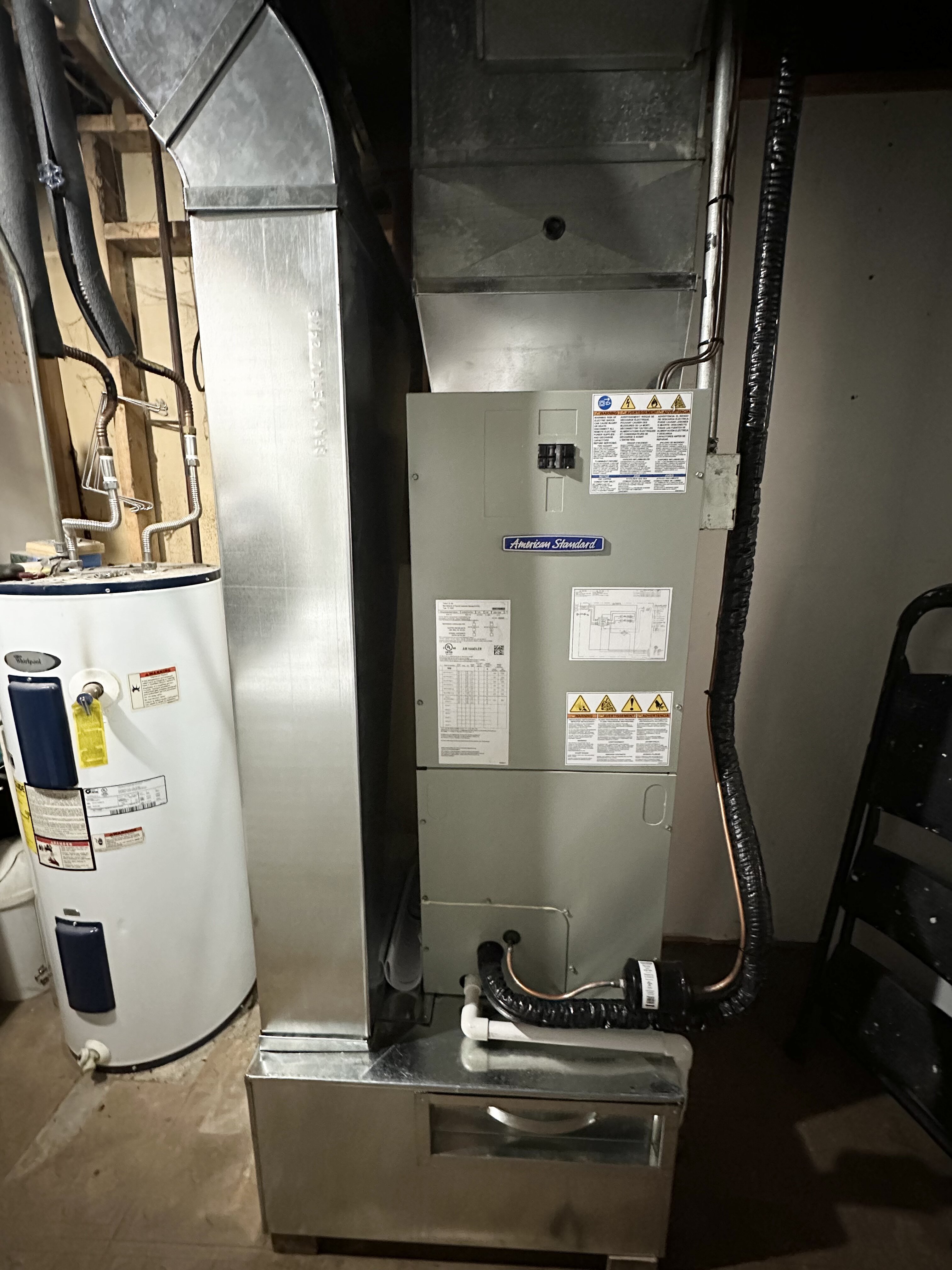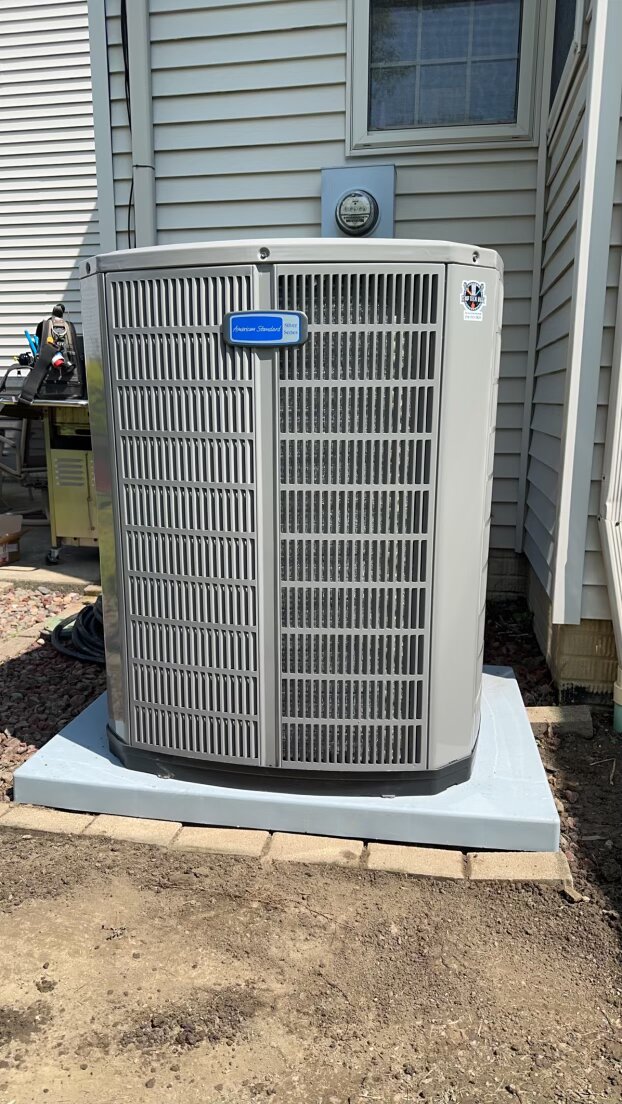
Northeast Ohio does not ease into winter. A mild October can flip into lake-effect snow, and once the wind comes off Lake Erie a furnace may not get a real break until April. Homes in North Ridgeville, Avon, Elyria, and the western suburbs feel that pattern every year: long runtimes, cold returns, and very little room for a system that was already struggling in March.
Temp Tech HVAC sees the same sequence each fall. The houses that stay comfortable are usually the ones that get a look before the first hard freeze, not the ones that wait for a no-heat night.
What a long heating season asks of the equipment
A furnace here is not a part-time appliance. Temperatures along the lake stay low enough that equipment runs for hours at a time, and older houses often have leaky ductwork in a cold basement or crawlspace. That combination shows up as rooms that never quite catch up, a blower that sounds louder than it did last year, and gas bills that climb even when the thermostat setting has not changed.
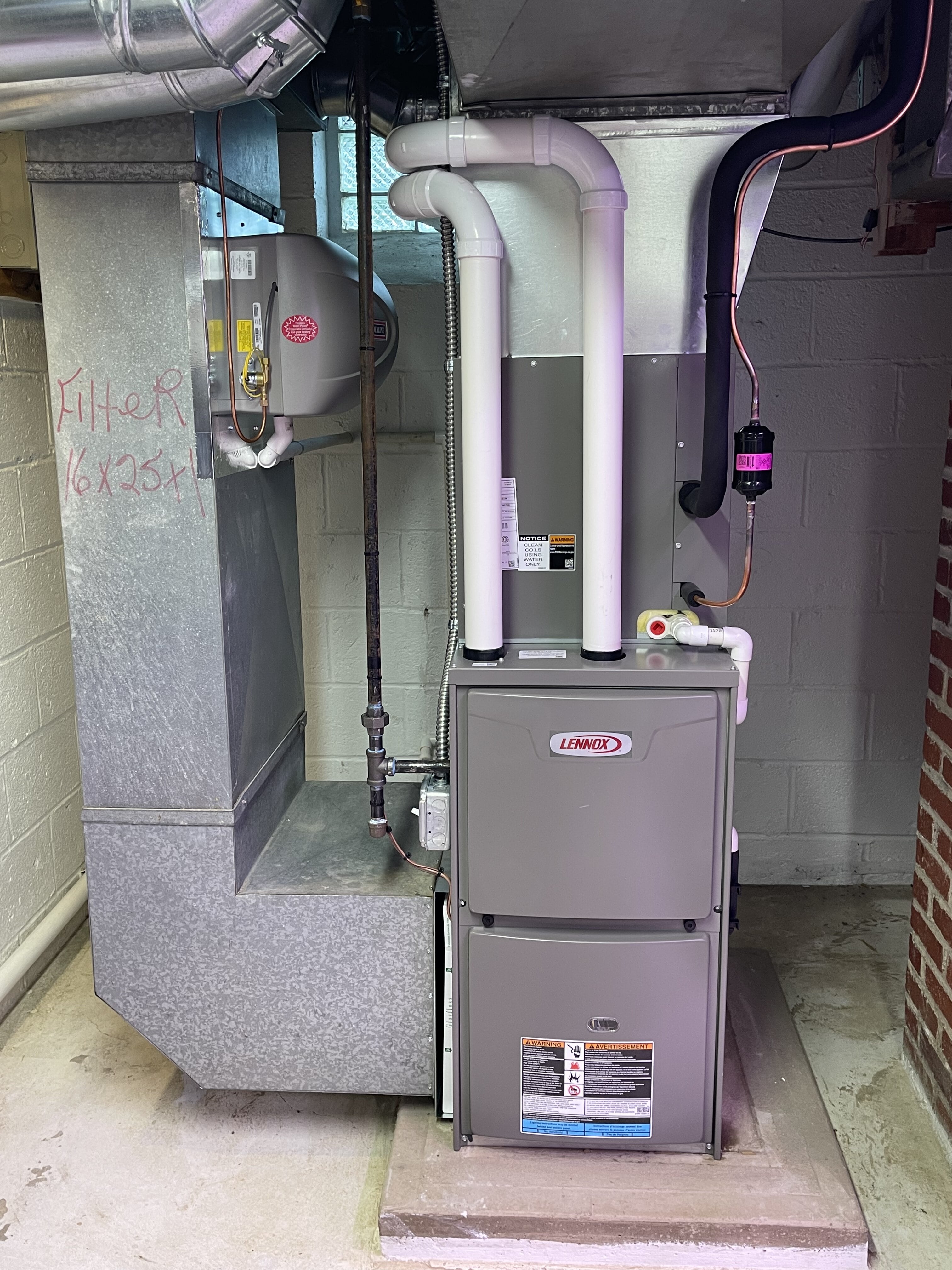
High-efficiency furnaces add another local wrinkle. The plastic intake and exhaust pipes that leave through a sidewall can ice over in blowing snow, and a condensate line that drains fine in October can freeze if it is pitched poorly. A blocked intake is a shutdown, not a slight loss of comfort.
A homeowner checklist before the first hard freeze
These are the items worth doing yourself. Anything that involves gas valves, the burners, or the inside of the cabinet belongs with a technician.
- Replace the filter, and write the date on the frame. A plugged filter is the most common reason a furnace overheats and shuts down on the coldest night of the year.
- Walk the supply and return vents. Make sure rugs, couches, and closed bedroom doors are not starving the system of air.
- Set the thermostat to heat and raise it a few degrees while you are home to listen. New banging, screeching, or a blower that will not start is worth a call before you need the heat overnight.
- Test smoke and carbon monoxide alarms, and put fresh batteries in any alarm that does not have a sealed 10-year cell.
- Keep the area around the furnace clear. Paint, laundry baskets, and boxes belong somewhere else.
- If you have sidewall intake and exhaust pipes, keep them clear of leaves now and snow later.
Leave the house and call your gas utility or emergency services. Do not stay inside to look for the source.
Signs the furnace needs more than a filter
A tune-up is routine. These are not:
- The burners light, the system runs a short time, then the burner shuts off while the blower keeps going. That short-cycling pattern often points to airflow, a limit switch, or a failing part.
- The burner flame is mostly yellow instead of steady blue.
- Some rooms are comfortable and others never get there, especially over a garage or at the end of a long duct run.
- The furnace is 15 years old or older and has needed parts two years in a row.
- There is rust around the cabinet, water near a high-efficiency unit, or a repeating error code on the control board.
A cracked heat exchanger is a safety issue, not a comfort issue. The reliable way to know is a combustion inspection. Taking the blower or burner compartment apart to look is not a homeowner project.
Why we push fall, not January
In January every heating company in Lorain and Cuyahoga counties is sorting no-heat calls. A fall visit lets us check the heat exchanger, clean the flame sensor, confirm temperature rise, and look at the condensate parts on a 90-percent-plus furnace while there is still time to order a part. It is also the right moment to talk about replacement if the system is at the end of its life, instead of making that decision when the house is at 58 degrees.
Temp Tech HVAC is based in North Ridgeville. We install and service American Standard and HEIL equipment, and we repair the other brands already in homes across Northeast Ohio. Heating checks are scheduled Monday through Friday, 7 a.m. to 5 p.m., and we do our best to get to emergency no-heat calls as quickly as we can.
If the system is due for a full replacement, ask for the free estimate. We size the equipment to the house. You can read more about our heating service, or request a visit.