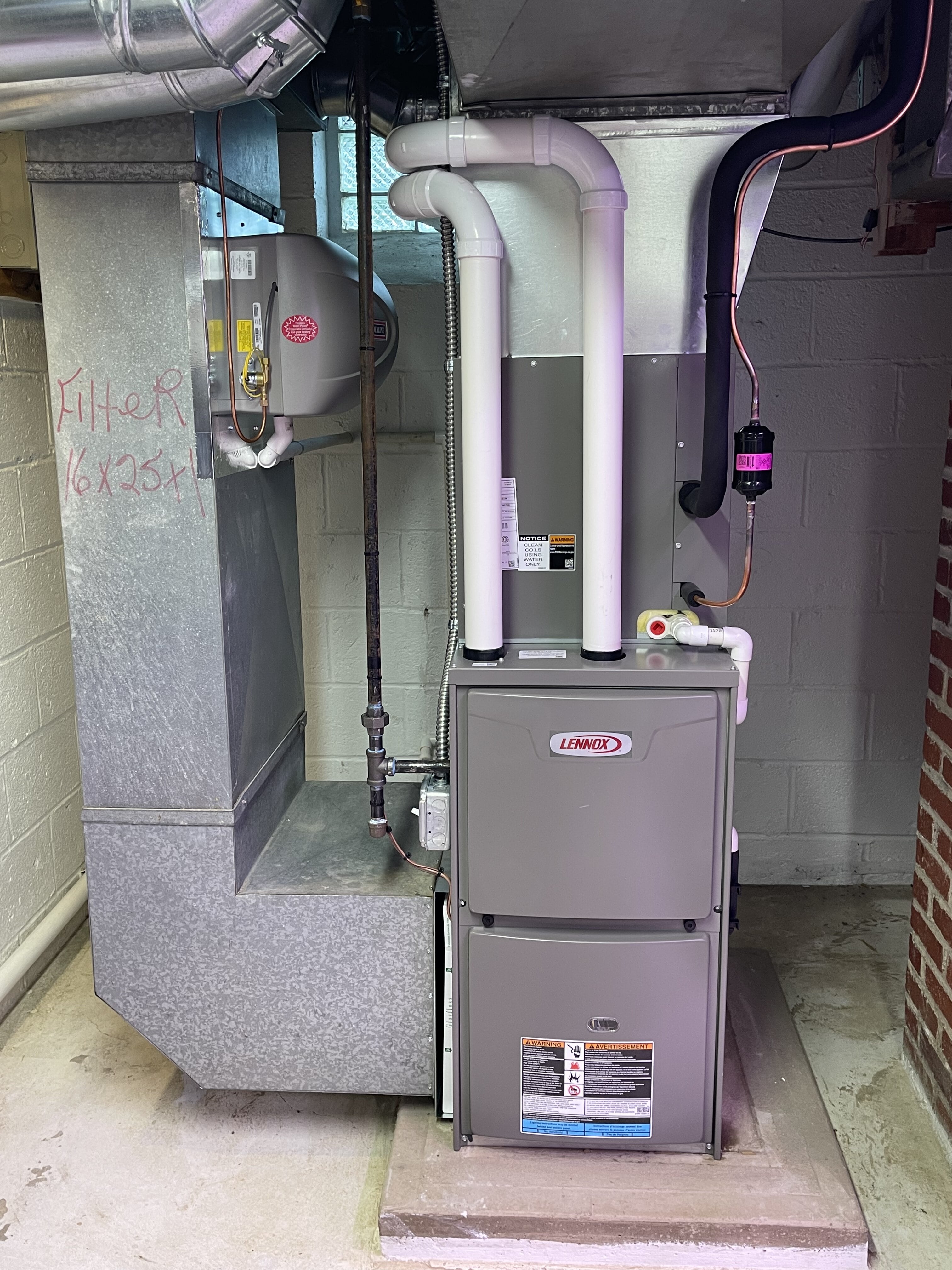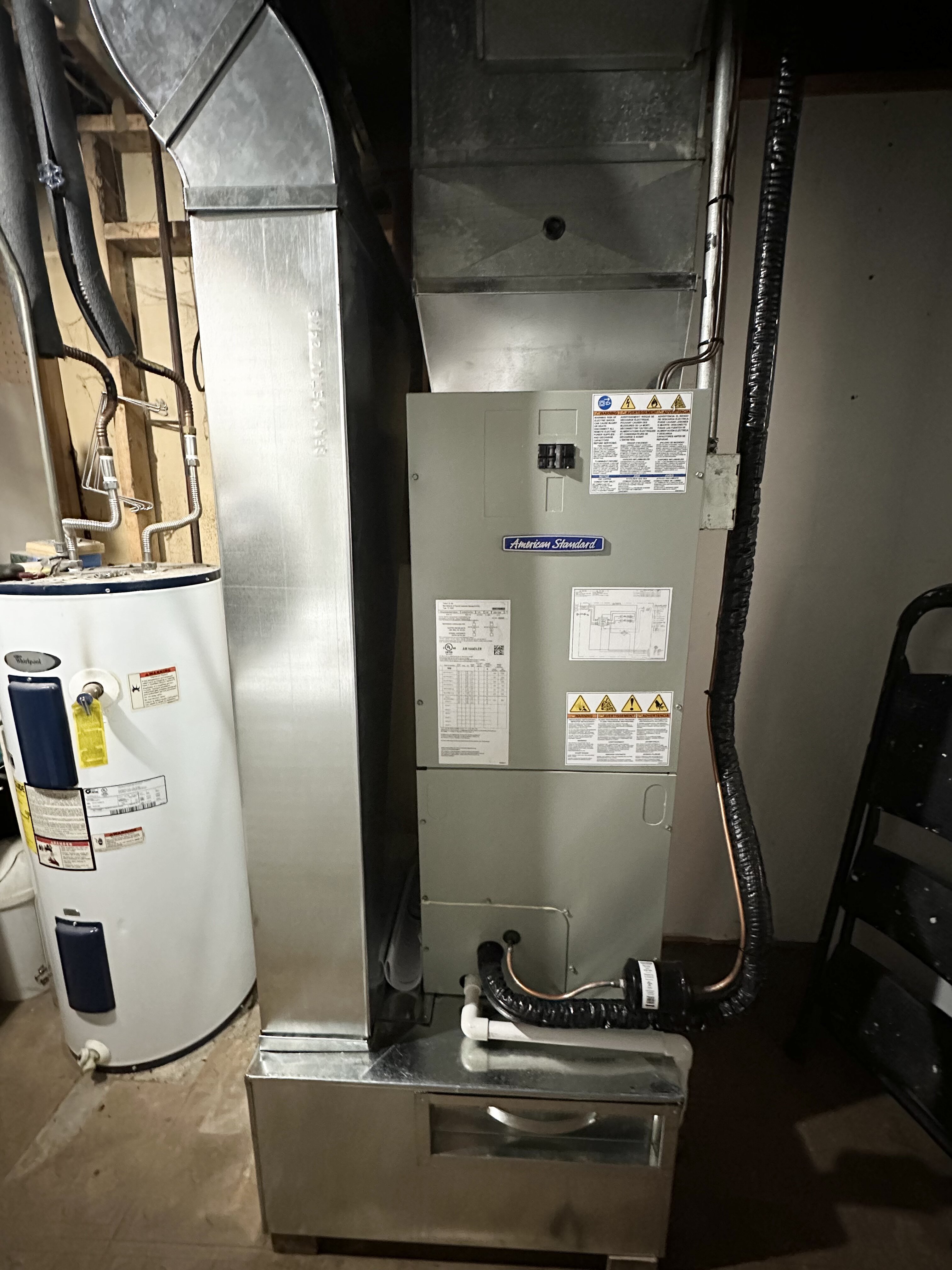
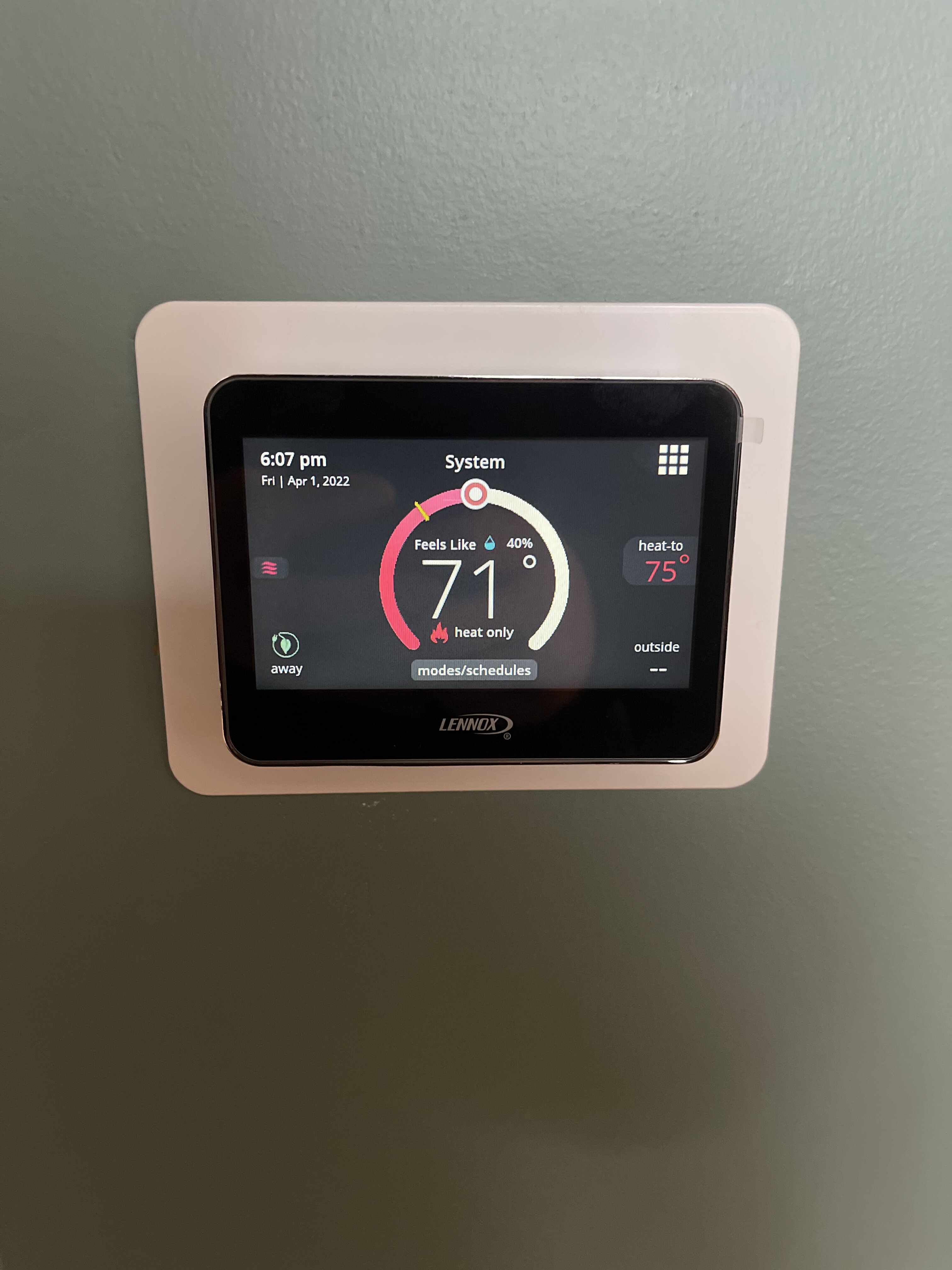
From roughly November through April, a Northeast Ohio house is a closed box. The furnace runs, the windows stay shut, and whatever is in the air stays in the air: dust from the ductwork, cooking, pets, and whatever the basement is contributing. Then spring arrives, the lake wind shifts, and tree pollen loads the same filter that just spent the winter drying the house out.
Indoor air quality here is a season-to-season problem, not a single product.
Winter dryness is the furnace doing its job
Forced-air heat warms air and, relative to a comfortable indoor temperature, dries it out. Static shocks, scratchy sinuses, and gaps in wood floors are the usual complaints by February. A portable humidifier in a bedroom helps that room. A whole-home humidifier tied to the furnace helps the house, as long as it matches the equipment and someone checks it so it is not scaling up or leaking into the duct.
More humidity is not automatically better. In a tight house, too much winter moisture shows up as condensation on windows and, worse, inside cold wall cavities. We set expectations room by room instead of promising a tropical living room in January.
The filter protects the equipment first
A filter can help with dust if the gaps around the filter rack are actually sealed. Jumping to a very high-MERV filter on a furnace or air handler that was not designed for it cuts airflow. Low airflow overheats furnaces and freezes evaporator coils. If you want heavier filtration, the blower has to be able to handle it, or the filter needs a media cabinet with more surface area.
Change the filter on a schedule you will keep. In a house with pets, or during cottonwood season near the lake, that may be monthly. A filter left in place from October to May is not filtering. It is a rug in the duct.
An air purifier does not dry a wet basement wall. Stop the moisture first. Filtration helps after the space is actually dry.
Spring pollen and summer moisture
When the windows open for the first warm week, pollen comes in and then the air conditioner is asked to deal with it. A cleaner coil and a decent filter do more here than a gadget plugged into an outlet in the corner of the living room.
Summer flips the problem toward moisture. Basements in Lorain and Cuyahoga counties are known for it. If the basement smells musty, look at grading, gutters, and a dehumidifier before you buy a purifier. A dehumidifier, or a properly running air conditioner, does the drying. A purifier helps with particles and some odors once the moisture is under control.
The order that usually works
- Stop active water problems.
- Give the heating and cooling equipment clean airflow.
- Add humidity control for the season that bothers you.
- Add filtration or purification if allergies, pets, or odors are still an issue after the first three.
Temp Tech HVAC installs humidifiers and air purification equipment, and we will tell you if the house does not need them yet. The details live on our indoor air quality page. If you want us to look at the system rather than start with a catalog, call the shop in North Ridgeville.